
Wednesday, December 09, 2009


Tuesday, December 08, 2009
Monday, December 07, 2009
The "hardly noticeable" power of God

An excerpt from iGracias! by Henri J.M. Nouwen
"A shoot shall sprout from the stump of Jesse,
and from his roots a bud shall blossom.
The spirit of the LORD shall rest upon him . . ."
(Isa.11:1-2).
Our salvation comes from something small, tender, and vulnerable, something hardly noticeable. God, who is the Creator of the Universe, comes to us in smallness, weakness, and hiddenness.
I find this a hopeful message. Somehow, I keep expecting loud and impressive events to convince me and others of God's saving power; but over and over again I am reminded that spectacles, power plays, and big events are the ways of the world. Our temptation is to be distracted by them and made blind to the "shoot that shall sprout from the stump."
When I have no eyes for the small signs of God's presence - the smile of a baby, the carefree play of children, the words of encouragement and gestures of love offered by friends - I will always remain tempted to despair.
The small child of Bethlehem, the unknown young man of Nazareth, the rejected preacher, the naked man on the cross, he asks for my full attention. The work of our salvation takes place in the midst of a world that continues to shout, scream, and overwhelm us with its claims and promises. But the promise is hidden in the shoot that sprouts from the stump, a shoot that hardly anyone notices.
More at www.henrinouwen.org
www.paulagamble.com
Monday, November 30, 2009
Doing the Letting

"Advent is about letting God come to us. We do the letting and God does the coming. And, the whole mystery of our faith is that God is not reluctant to come into an unusual relationship (like Mary and Joseph's) or to be born in the poverty of a makeshift stable. We are tempted to prepare for Advent by cleaning everything up first - by, in effect, saving ourselves first. Our opening to Advent is to realize we need saving and to accept the saving love of our God."http://onlineministries.creighton.edu/CollaborativeMinistry/Advent/preparing-advent.html
Letting God come is like letting the blue of the night sky overshadow and envelope the orange tint at sunset. In this, there is union, beauty and transformation - a new sun rising fresh each morn.
- How will you "do the letting" today?
- Do you believe that God is NOT reluctant to come to you - despite your lack and need?
www.paulagamble.com
Monday, October 19, 2009
The Two Sides of One Faith
Our faith in God who sent his Son to become God-with-us and who, with his Son, sent his Spirit to become God-within-us cannot be real without our faith in the Church. The Church is that unlikely body of people through whom God chooses to reveal God's love for us. Just as it seems unlikely to us that God chose to become human in a young girl living in a small, not very respected town in the Middle East nearly two thousand years ago, it seems unlikely that God chose to continue his work of salvation in a community of people constantly torn apart by arguments, prejudices, authority conflicts, and power games.
Still, believing in Jesus and believing in the Church are two sides of one faith. It is unlikely but divine!
from Henri Nouwen daily meditation
www.paulagamble.com
Still, believing in Jesus and believing in the Church are two sides of one faith. It is unlikely but divine!
from Henri Nouwen daily meditation
www.paulagamble.com
Monday, October 12, 2009
Celebrating Holy Uselessness

In my spiritual leadership class this fall we have had to come up with a self-care project. Mine is play. I just don't play enough! In the midst of the demands of ministry (emotionally, physically, spiritually and mentally) I need to care for myself by having moments of fun sprinkled throughout my day/week.
In my intellectual "research" on play I came across this quote:
"Play exists for its own sake.
Play is for the moment; it is not hurried,
even when the pace is fast and timing seems important.
When we play, we also celebrate holy uselessness.
Like the calf frolicking in the meadow, we need no pretense or excuses.
Work is productive;
play, in its disinterestedness and self-forgetting,
can be fruitful."
play, in its disinterestedness and self-forgetting,
can be fruitful."
Margaret Guenther in Toward Holy Ground
I have a long way to go to integrate more holy uselessness into my days. But I am convinced playfulness is a more important part of my spiritual formation than I ever imagined. To give myself permission to play feels like swimming upstream in the culture of ministry. I must pay attention to all of the compulsions and resistance that keep me from engaging in playfulness.
How are you playing/being holy useless this week?
Sunday, October 11, 2009
The lost art of listening

I picked up Eugene Peterson's The Contemplative Pastor again. It is one of those books I return to frequently to help remind me what I am supposed to focus on as one who follows a compassionate and unhurried Christ. Today I'm struck by Peterson's self-pondering, "The question I put to myself is not 'How many people have you spoken to about Christ this week?' but 'How many people have you listened to in Christ this week?'" (21).
Coming from over two decades of vocational ministry and having had to turn in statistics counting the former (speaking to others), but never the latter (listening to others), it makes me wonder:
- Why did I never have a seminary class on listening? There is homiletics and hermeneutics, but what about hearing God? Self? Others? (I did learn how to listen and pay attention to culture in my Intercultural Studies degree and I am learning to listen to "self" in my Spiritual Formation classes at Fox!)
- Theological debates are always verbose - people trying to prove their reasoning and thus "listening" merely to garner points to disprove, with verbosity, anothers' "faulty" reasoning. What would happen, instead, if we listened more to one anothers' hearts than to their reasoning (and our intent to disprove it) alone?
- Jesus never un-welcomed someone for their different theologies (except perhaps the Pharisees) and He was an equal-opportunity listener to those with different genders, economic status, race, nationalities etc. Who do I "instantly" close my ears to because they are different from me?
- Why are new disciples trained to be so wordy in prayers, in teaching, in evangelism and in sharing testimonies? How might discipleship programs teach listening to God, self, culture and others in our quiet times, witnessing, prayer and Home Fellowships/Bible Studies?
- Why is it that I have been taught that my greatest growth as a disciple depends mostly upon listening to other people's sermons, books, seminars, teachings etc? Who teaches the disciple to listen to God in the daily ordinariness of life in nature, self-reflection, good fiction, strangers,dirty diapers etc?
- How can I, like Jesus, join the Father in what He is doing if I do not take time to pay attention to what He is doing? How can I heed His invitations if I cannot hear them? It is far easier to make (and measure) my own plans and ask God to bless them, than to listen to His plans and join Him.
- Why do so many need to pay a professional to "listen" to them when it is our job as the body of Christ to do that for one another?
- What would change if missions organizations had a column in their weekly statistic gathering for "listening" to others in Christ vs. merely speaking to others about Him?
Listening also requires unhurriedness. To be fully present to one another (or even to myself and God) is a rare and wonderful gift! But if I am busy, thinking about what is next on the schedule, I will not listen (nor, consequently, love the other,) well. I am double minded - unstable in all my ways and in what I offer. If I have not cultivated a habit of paying attention to God and my own soul in the quiet times of solitude and silence, I cannot impart the space and energy required to engage in loving others with my ears and heart. People can mince and manipulate words and fake sincerity. You cannot fake being a good listener. It takes time and not a little amount of energy to "hear" beyond what is being said on the surface.
Perhaps that is why in the Old Testament the most often iterated command is: "Hear/Listen."
In the twice daily repeated Jewish Shema (which is, incidentally, the Hebrew word for "hear/listen"), an invitation to Listening and Love are mingled together:
"Hear, O Israel, the Lord our God is One.
Love the Lord your God with all your heart, soul mind and strength."
Deut 6:4
How do we become good at listening/loving?
According to Peterson
- Practice lingering and unhurriedness - with a friend, child, spouse, pet, stranger, elderly person etc. Another offer suggests slowing to look at one thing a day through a magnifying glass - pay attention, do not rush.
- Schedule "margin" in your days so you are not rushing from one thing to the next and thus can linger honestly, sincerely and with focus and enjoyment;
- Cultivate a "listening" prayer life: "I can be active and pray; I can work and pray; but I cannot be busy and pray. I cannot be inwardly rushed, distracted and dispersed. In order to pray I have to be paying more attention to God than to what people are saying to me; to God than to my clamoring ego. Usually for that to happen there must be a deliberate withdrawal from the noise of the day, a disciplined detachment from the insatiable self" (20).
Incidentally, the qualities of Love mentioned in 1 Corinthians 13 seem suspiciously similar to someone who is a good listener:
4Love is patient, love is kind.
It does not envy, it does not boast, it is not proud.
5It is not rude, it is not self-seeking,
it is not easily angered, it keeps no record of wrongs.
6Love does not delight in evil but rejoices with the truth.
7It always protects, always trusts, always hopes, always perseveres.
Wednesday, October 07, 2009
If I may hold your hand...it is enough

A little prayer for today:
As the rain hides the stars,
as the autumn mist hides the hills,
happenings of my lot
hide the shining of Thy face from me.
Yet, if I may hold Thy hand
in the darkness,
it is enough;
since I know that,
though I may stumble in my going,
Thou dost not fall.
Alistair Maclean
in Celtic Daily Prayer reading for 23rd day of month
www.paulagamble.com
Tuesday, October 06, 2009
Why is busy okay?

Over the weekend I was with a group of ladies and we were pondering together how to be still in the midst of the noisiness and demands of life. Living un-busy is counter-cultural as my friend discovered during her trip to the dentist yesterday. She was greeted with, "Hi, Keeping busy?" to which she automatically replied yes.
But after our weekend of pondering what rest and stillness might actually do to bring life and meaning to our worlds, she realized the awkwardness of this familiar phrase of greeting: She writes her questions spurred on by the encounter: "Is keeping busy the equivalent to doing fine, and if I'm not keeping busy, does that mean I'm not doing well?" Seemingly, according to the cultural norm, yes.
As she talked about her musings with the dentist, the dentist replied (somewhat wistfully), "You know, in all the times I've asked people that, the answer's always the same!"
Brenda continued: "I told her that I'd recently been reminded of the importance of resting, to which she nodded sympathetically and then launched into how she is a workaholic and if she took time off wouldn't know what to do with herself, etc."
Unfortunately, not much is different in the church and in our ministries. Busy is worn as a badge of honor - perhaps because my ego is too frail and has to live off the appearance of doing significant things. Un-busy feels lazy - even when I am doing the good and right and best things of caring for my family and my soul so that I can continue to pour out to others. I know in my head this is not how God measures my significance, but there is an underlying compulsion to produce, to prove and to render acceptable my life by what I do.
Eugene Peterson, in his book the Contemplative pastor, writes about this: "The word busy is the symptom not of commitment but of betrayal. It is not devotion but defection. The adjective busy set as a modifier to pastor should sound to our ears like adulterous to characterze a wife or embezzler to characterize a banker. It is an outrageous scandal, a blasphemous affront" (17).
The un-ing of my life continues - un-busying because if I cannot say no, what does that say about my yeses?
Anyone else encounter this?
www.paulagamble.com
Saturday, September 12, 2009
Through the breathtaking empty space of an open door...
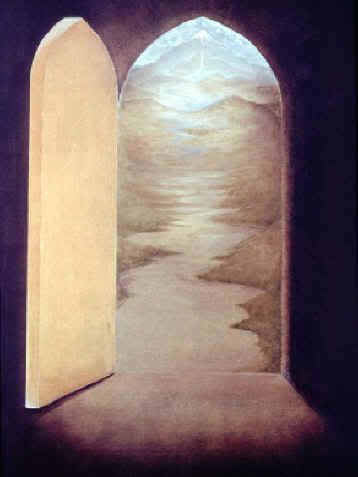
This prayer is from the Celtic Daily Prayer book - I like it and have prayed it often lately:
Lord, help me now to unclutter my life,
to organize myself in the direction of simplicity.
Lord teach me to listen to my heart;
teach me to welcome change, instead of fearing it.
Lord, i give you these stirrings inside me,
I give You my discontent,
I give You my restlessness,
I give You my doubt,
I give You my despair,
I give You all the longings I hold inside.
Help me to listen to these signs of change, of growth;
to listen seriously and follow where they lead
through the breathtaking empty space of an open door.
to organize myself in the direction of simplicity.
Lord teach me to listen to my heart;
teach me to welcome change, instead of fearing it.
Lord, i give you these stirrings inside me,
I give You my discontent,
I give You my restlessness,
I give You my doubt,
I give You my despair,
I give You all the longings I hold inside.
Help me to listen to these signs of change, of growth;
to listen seriously and follow where they lead
through the breathtaking empty space of an open door.
Need some space to reflect more deeply on your restlessness? Need help in stepping through the breathtaking empty space of an open door? How about joining me on a ReFresh retreat - one spot left for Sept. 16th. More info here
Sunday, August 30, 2009
Unsolved heart questions
 Have patience with everything that remains unsolved in your heart, Try to love the questions themselves...do not look for answers...
at present you need to live the question..." Rainer Maria Rilke
Lately, I've had trouble living the questions -and I've had a lot of them: About God and how He works; about me, and how I can live better; about our world - why there is so much woundedness and pain. In my quest to find answers, I've expended a whole bunch of energy trying to figure "it" out ("it" translated as whatever I think "it" should be). Most times I discover that the "it" I am trying to figure out has little to do with God's heart and intention. More often than not, I realize that I am looking for answers so that I can be comforted, feel secure, affirmed and assured that I'm doing "it" (again - whatever "it" is) well.
When I become tired of expending so much energy in what seems fruitless (figuring "it" out - or thinking I have, only to discover that the "it" I've surmised, defined and figured out did not truly solve my deepest heart need), I turn to diversions - I make assumptions, presumptions and rationalizations while trying to define and dictate what I think will be pleasing to God. But it is my limited finite solution that remains limited and finite. Or if that fails, I just get busy so that I don't have to face the inadequacies of my heart full of unanswered questions.
Another human struggling with unanswered heart questions wrote:
"Above all, trust the slow work of God. We are quite naturally impatient in everything to reach the end without delay. We should like to skip the intermediate stages. We are impatient of being on the way
to something unknown, something new... Only God could say what this new spirit gradually forming within you will be. Give our Lord the benefit of believing that His hand is leading you, and accept the anxiety of feeling yourself
in suspense and incomplete."
to something unknown, something new... Only God could say what this new spirit gradually forming within you will be. Give our Lord the benefit of believing that His hand is leading you, and accept the anxiety of feeling yourself
in suspense and incomplete."
Pierre Teilhard de Chardin
- What are some of your unsolved heart questions that you are living?
- What are you feeling in suspense about - what are questions that you cannot answer in your life?
- What feels incomplete?
- Do you think that your longing for answers is an important part of "living the questions"?
- Offer your unsolved heart questions and "in-suspense-ness" to the I Am - rest in His infinite, perfect and loving heart for you.
Incidentally, we weren't meant to figure "it" out because life is not an impersonal strategic action plan that we can organize and streamline with time-saving gadgets. Life is relational - inaugurated by the Great I Am - not an impersonal and innocuous "it."
Living the question is hard work...it is good work because we walk WITH Another who gently leads and liberates us (vs. gives us knowledge and answers and strategies for living).
www.paulagamble.com
Thursday, August 20, 2009
Resting Between His Shoulders
What do you love most about this picture?

I love the face of the mama who has great delight in her baby, who is completely at rest between her mama's shoulders. My friend Ashley shared this verse with me a few weeks ago and I have been astounded by it:

I love the face of the mama who has great delight in her baby, who is completely at rest between her mama's shoulders. My friend Ashley shared this verse with me a few weeks ago and I have been astounded by it:
"Let the beloved of the Lord rest secure in Him
for He shields him all day long;
and the one the Lord loves rests between His shoulders"
Deut 33:12
for He shields him all day long;
and the one the Lord loves rests between His shoulders"
Deut 33:12
Beloved;
rest secure
shields,
rests...
ahhhh
Then I shared it with another friend, Jeremy, in prayer. It brought tears to his eyes as he recounted his own musings and meditations on that very verse over the past few weeks.
Then I lunched with Robin - shared it with her as an invitation to continue to rest securely in the midst of much chaos. Later that day she saw the picture above on a friend's facebook page - the baby's name is Princess and what is she doing?
Yup -
Cool.
Seems like a pretty cool invitation - one I need to continue heeding - believing that Papa delights in (and yes, is especially fond) of such moments.
Rest between His shoulders - beloved - rest securely...
www.paulagamble.com
rest secure
shields,
rests...
ahhhh
Then I shared it with another friend, Jeremy, in prayer. It brought tears to his eyes as he recounted his own musings and meditations on that very verse over the past few weeks.
Then I lunched with Robin - shared it with her as an invitation to continue to rest securely in the midst of much chaos. Later that day she saw the picture above on a friend's facebook page - the baby's name is Princess and what is she doing?
Yup -
Cool.
Seems like a pretty cool invitation - one I need to continue heeding - believing that Papa delights in (and yes, is especially fond) of such moments.
Rest between His shoulders - beloved - rest securely...
www.paulagamble.com
Tuesday, August 18, 2009
Spreading the laundry love - Love this!

Some fellow CRM staff in Phoenix are spreading the Love of God through laundry! Check this out - so creative and good!
www.paulagamble.com
Nobody or Somebody?
Clinging to God in Solitude
"When we enter into solitude to be with God alone, we quickly discover how dependent we are. Without the many distractions fo our daily lives, we feel anxious and tense. When nobody speaks to us, calls on us, or needs our help, we start feeling like nobodies. Then we begin wondering whether we are useful, valuable, and significant. Our tendency is to leave this fearful solitude quickly and get busy again to reassure ourselves that we are "somebodies." But that is a temptation, because what makes us somebodies is not other people's responses to us but God's eternal love for us.
To claim the truth of ourselves we have to cling to our God in solitude as the One who makes us who we are."
From Henri Nouwen society - www.henrinouwen.org
"When we enter into solitude to be with God alone, we quickly discover how dependent we are. Without the many distractions fo our daily lives, we feel anxious and tense. When nobody speaks to us, calls on us, or needs our help, we start feeling like nobodies. Then we begin wondering whether we are useful, valuable, and significant. Our tendency is to leave this fearful solitude quickly and get busy again to reassure ourselves that we are "somebodies." But that is a temptation, because what makes us somebodies is not other people's responses to us but God's eternal love for us.
To claim the truth of ourselves we have to cling to our God in solitude as the One who makes us who we are."
From Henri Nouwen society - www.henrinouwen.org
Friday, August 07, 2009
For Better or Worse...
 "The Parable of the Weeds Among the Wheat"
My team and I are reading a book called, Weeds Among the Wheat by Thomas Green. This morning I read of how times of desolation are like "worse" part of the marriage vow of "for better or worse." Most times, if the partners stay true to the relationship, without trying to get something out of the other, the "worse" makes the "better" better - even with God. Both seasons are necessary gifts to both reveal and strengthen our love.
In the midst of some of my own sense of desolation lately, this gives me courage and hope. There is a refining happening that will not only purify my heart, but also "fuse me" to the love of Jesus Christ. He is not fixing me...he is loving me...and it is strangely miserable and wonderful. Eager to see how this "worse" will make the "better" better.
www.paulagamble.com
Wednesday, August 05, 2009
Tears create a place of welcome...

"You keep track of all my sorrows;
You have collected all my tears in your bottle.
You have recorded each one in your book."
~Psalm 56:8
You have collected all my tears in your bottle.
You have recorded each one in your book."
~Psalm 56:8
The Tears of the Father
During these long years of waiting the father cried many tears and died many deaths. He was emptied out by suffering. But that emptiness had created a place of welcome for his sons when the time of their return came. We are called to become like that father."
Henri Nouwen-Bread for the Journey
+++++
What makes your heart ache? What has brought tears? Could you possibly believe that the One who is acquainted with sorrows and griefs is fully aware and doing a deeper work in you than you can imagine, or even manufacture, for yourself? Today, take hope that any emptying in you will lead to a spacious place of welcome - both for God and others. As Augustine said, "God gives where he finds empty hands."
This desert/Valley of Achor will lead to a door of hope (Hosea 2:14-15)
Oh Lord, help me today to receive
this emptying
with hope that you alone
could turn it into a spacious place -
a place of welcome,
perhaps even celebration.
Gift me, please, with a sense of your nearness
as the Suffering Servant; Suffering Father; Suffering Spirit.
~Amen
Tuesday, August 04, 2009
What caught my attention in the woods
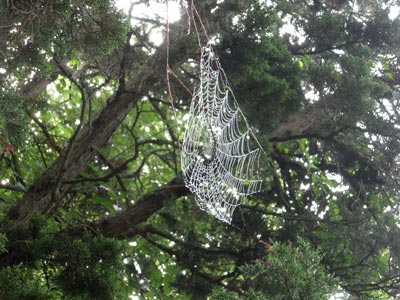
Today I started the day off right - out in the woods. Early, quiet, a rich treat for eyes, ears and nose. As the sun was streaming in, it highlighted several spider webs - so amazingly beautiful, delicate and only visible when the sun would "backlight" them. (Hence the constant running into non back-lit webs across the path - not so pleasant!)
Indeed, much of deep soul stuff is lived "unnoticed" and hidden - until a light shines in and illuminates what is there. Without the light, we walking into the annoying webs unaware. With the light, we can appreciate their beauty - and avoid the sticky mess resulting from collision.
May I be content to be hidden unawares,
until God's light shows forth my beauty.
www.paulagamble.com
Friday, July 31, 2009
Reservoir vs. canal

Bernard of Clairvaux said this nearly 1000 years ago...a good word for our century as well:
“If then you are wise, you will show yourself rather as a reservoir
than as a canal. For a canal spreads abroad water as it receives it,
but a reservoir waits until it is filled before overflowing,
and thus communicates, without loss to itself,
its superabundant water.
In the church at the present day (1100s),
we have many canals, few reservoirs.”
than as a canal. For a canal spreads abroad water as it receives it,
but a reservoir waits until it is filled before overflowing,
and thus communicates, without loss to itself,
its superabundant water.
In the church at the present day (1100s),
we have many canals, few reservoirs.”
(in Richard Foster, Prayer, 168).
When I come to God only because I have a Bible study to teach, worship to lead or a small group I'm expected to participate in and have answers for, God becomes a means to an end, rather than the end. It is so subtle, but it is a way of using God for what I want and need - quite often according to my agenda and my own definitions of what I think is spiritual. Operating this way over time leads to a weary depletion and dissatisfaction. I know...I've lived such a utilitarian spirituality. It works for a while - but there is so much more. I also know because my job now is to help those who are tapped out from living as canals learn to let their souls be filled with Love before loving others. The first command to Love Him must precede the second. Coming to Him simply because you know He delights in being with you is a radically different way to have the proverbial traditional "quiet time" (which ironically is rarely quiet).
Learning to enjoy Him for Him - that is how one becomes a reservoir. Coming to hear what He has to say (vs. me telling Him, "this is what I want, how I want it and when I want it by") or even to say nothing - enjoying a wordless being-together - is the way we deepen both our prayer lives as well as our intimacy with God. It is the only way I can give of myself without loss to myself.
Do you know God beyond what you can do for Him or what He can do for you?
The best posture for such is open handed receptivity. No pretense, no demands. Letting go of any agendas, excuses and expectations - the One who knows you and loves you knows how to meet the deepest and neediest parts of your soul. Let God dictate in love how He wants to deal with you. (Psalm 119:124)
Try this today:
- Take a few deep breaths and as you exhale, say, "Thank you."
- Set a timer for 10 minutes. The purpose isn't to restrict you to 10 minutes, but to allow you the freedom to focus on God vs. wondering, "Is my 10 minutes up?" Do not journal anything during these 10 minutes. And try to not even say anything (verbally or in your head). Whatever happens, sit in the 10 minutes with God - without agenda, without verbal requests or intercessions. Let Him take the lead - even if that lead is silence.
- If you are distracted during that time, use a phrase such as, "Abba I belong to you" to re-center you towards the Lord. If a person comes to mind, you might just say, "God, I lift him/her to you. You know his/her needs" and return to refocusing on God.
- After the 10 minutes A) Take a few more minutes to journal what happened in that time. Were you distracted? Did the time seem long or short? Did you want to continue beyond the alarm? Did you sense God saying anything to you? Did God make you aware of anything about Himself or yourself? B) Journal how you felt about your interaction with God (e.g. How did you feel about sitting with God without an agenda or prayer requests?) How did this time open your heart to trust His love?
- During this time avoid making principled statements about God or yourself (e.g. God wants all Christians to...) Instead, pay attention to what He is inviting you toward.
- Close by taking a couple more deep breaths and again saying "Thank you."
If you want to delve into some of Bernard of Clairvaux's writings on love click here. (They can be a bit dense, but they are classic.)
www.paulagamble.com
Thursday, July 30, 2009
Starved for Mystery...intimacy...rest...quiet...

"We are a very busy, wordy and heady faith tradition.
Yet we are desperate to find ways
to open ourselves to our God
who is, in the end,
beyond all of our human constructs and human agendas.
With all of our emphasis on theology and Word, cognition and service
- and as important as these are -
we are starved for mystery,
to know this God as the One who is totally Other
and to experience reverence in his presence.
We are starved for intimacy,
to see and feel and know God in the very cells of our being.
We are starved for rest,
to know God beyond what we can do for him.
We are starved for quiet,
to hear the sound of sheer silence that is the presence of God himself."
(Ruth Haley Barton, Invitation to Solitude and Silence, 21)
Yet we are desperate to find ways
to open ourselves to our God
who is, in the end,
beyond all of our human constructs and human agendas.
With all of our emphasis on theology and Word, cognition and service
- and as important as these are -
we are starved for mystery,
to know this God as the One who is totally Other
and to experience reverence in his presence.
We are starved for intimacy,
to see and feel and know God in the very cells of our being.
We are starved for rest,
to know God beyond what we can do for him.
We are starved for quiet,
to hear the sound of sheer silence that is the presence of God himself."
(Ruth Haley Barton, Invitation to Solitude and Silence, 21)
Sit quietly with the Lord today and ask him, "Lord, what am I most starved for?" Listen for His invitations toward himself and his love.
www.paulagamble.com
www.paulagamble.com
Monday, July 27, 2009
Backsliding or invitation to more?
I just spent the past 10 days with a whole lot of really great people - people who have invested their lives in vocational ministry as church planters, campus ministers, and lovers of God and people. But I also had a half dozen conversations with these seasoned folks who felt like God had "disappeared" from them. In an effort to try to get God to come closer each person described how he/she prayed more, memorized more scripture and even fasted. None of these are bad things, but I was saddened that these dear people were trying to lure God out of hiding with their righteous deeds.
As I listened to this over and over again, I was able to share with them a larger vision of spiritual maturity - our goal is not to merely be organized, efficient and dutiful disciples; Our goal is to be lovers - letting ourselves be loved by Him and letting that well up and out toward others. (Think first and second greatest commands - all about love). Many of the great saints that have preceded us (Teresa of Avila, John of the Cross, Bernard of Clairvaux) actually speak of this awkward latter season of faith. It is a time where there is a deep inward draw toward intimacy with God, but also sometimes a seeming absence of Him. Thomas Dubay, a modern day Jesuit, has said that some of greatest spiritual growth is often discerned as backsliding. And indeed, these people felt like they were backsliding and had to come up with a horrendous self-effort to get back into God's graces.
Does that strike anyone else as odd? (This working really hard to get into God's graces which are unearned and generous gifts?)
Our longing for more is the best thing about us - perhaps the most sure thing about us. It is God drawing us into greater heights, depths, widths and breadths of His love that surpasses our understanding. This is the most wondrously precarious journey of faith we can be on.
Take courage friends - God is with us always, a neighbor to your fears and longings and unafraid.
www.paulagamble.com
As I listened to this over and over again, I was able to share with them a larger vision of spiritual maturity - our goal is not to merely be organized, efficient and dutiful disciples; Our goal is to be lovers - letting ourselves be loved by Him and letting that well up and out toward others. (Think first and second greatest commands - all about love). Many of the great saints that have preceded us (Teresa of Avila, John of the Cross, Bernard of Clairvaux) actually speak of this awkward latter season of faith. It is a time where there is a deep inward draw toward intimacy with God, but also sometimes a seeming absence of Him. Thomas Dubay, a modern day Jesuit, has said that some of greatest spiritual growth is often discerned as backsliding. And indeed, these people felt like they were backsliding and had to come up with a horrendous self-effort to get back into God's graces.
Does that strike anyone else as odd? (This working really hard to get into God's graces which are unearned and generous gifts?)
Our longing for more is the best thing about us - perhaps the most sure thing about us. It is God drawing us into greater heights, depths, widths and breadths of His love that surpasses our understanding. This is the most wondrously precarious journey of faith we can be on.
Take courage friends - God is with us always, a neighbor to your fears and longings and unafraid.
www.paulagamble.com
Subscribe to:
Posts (Atom)


 Posts
Posts


